
Affiliate Links Disclosure
Links in this article are affiliate links. If you buy through them, I may earn a small commission at no extra cost to you. I only link products I use and genuinely trust.
My first few transfers into Pon were not elegant. The plants threw a tantrum, the roots sulked, and I learned very quickly that “just repot it” is bad advice when you are moving from soil into an inert mineral substrate.
So I iterated. I changed one variable at a time, watched what failed, kept what worked, and repeated that loop until I landed on a process that is genuinely hard to break. At this point, my success rate is about 99%. The only real failure cluster happened when I did something objectively stupid and potted three plants in one pot. Two did not make it. That one is on me.
This method is actually very universal. I use it when I size up to a bigger pot, with potting up imports or even for stressed plants and acclimated tissue culture plants. It works across genera, not just Alocasia, but Alocasias are the loudest about root disruption, so they tend to be the ones that teach you the lesson the fastest.
What you are actually asking the plant to do
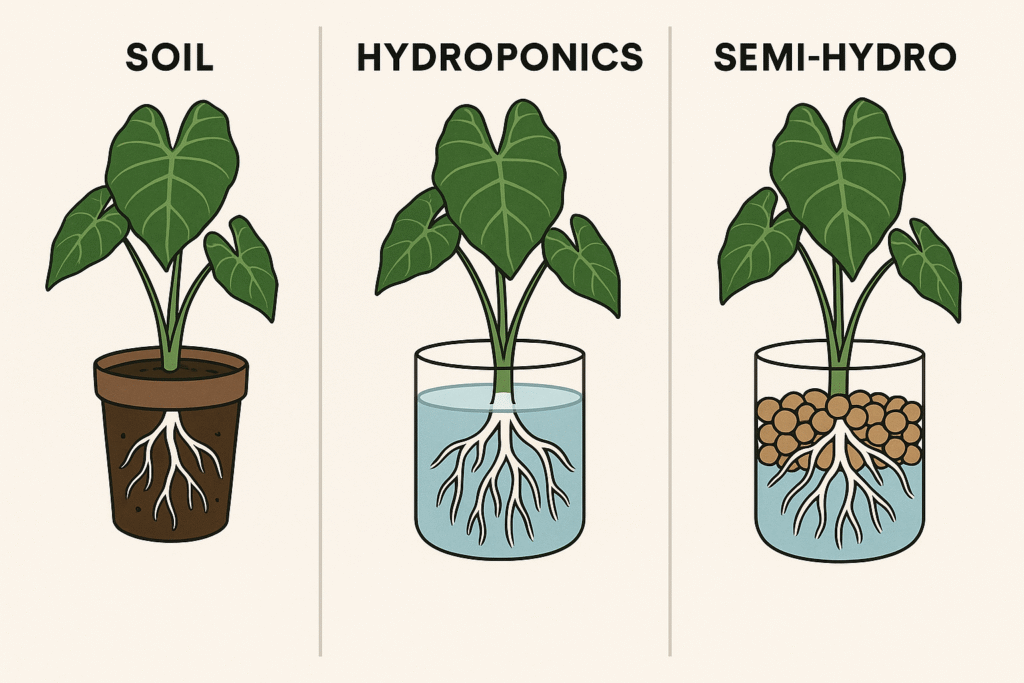
Soil is forgiving. It buffers mistakes by holding nutrients on organic matter. It has microbes doing quiet defence work while moisture swings between wet and dry, which is what soil roots are built for.
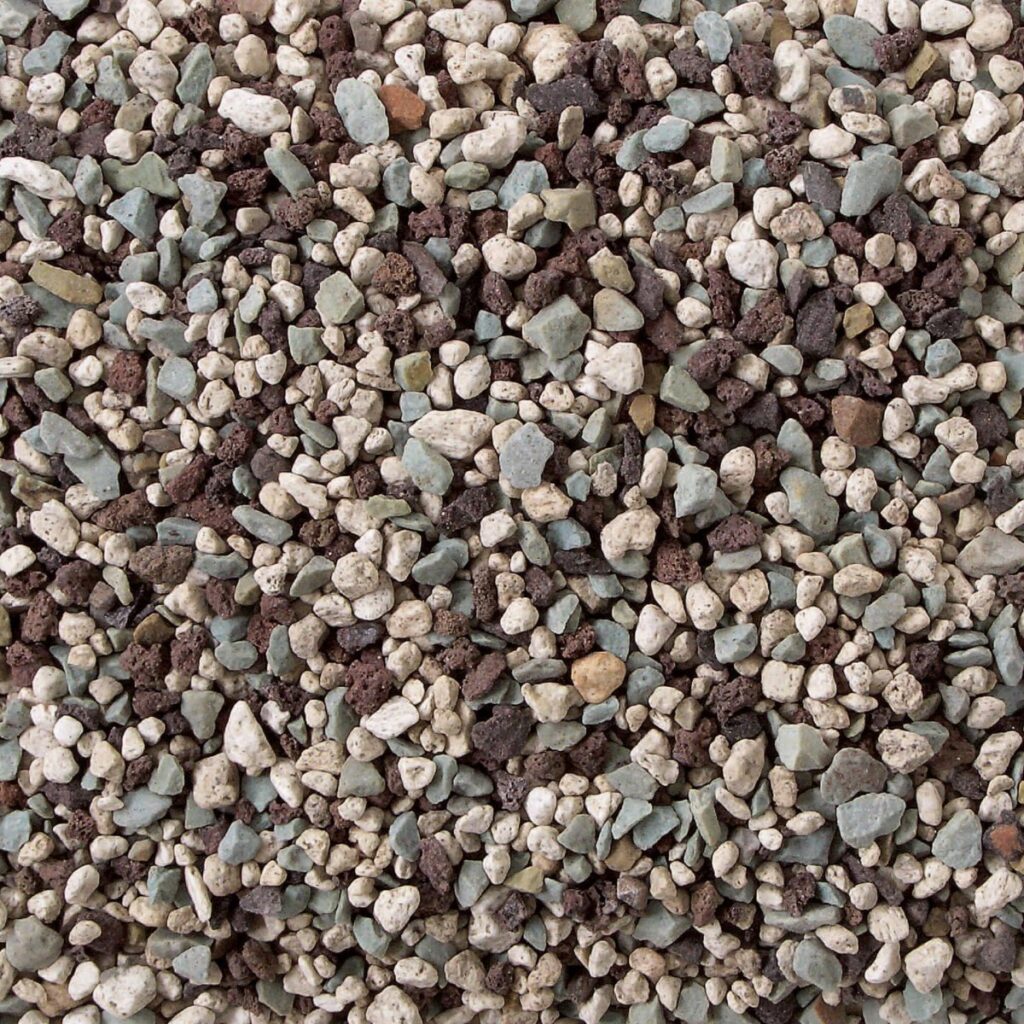
Pon is honest in a brutal way. It is inert, so it does not buffer nutrients. Water moves through it by capillary action and oxygen levels depend on how wet you keep it and how well the substrate stays airy. When you feed, the roots feel those nutrient ions directly.
That is why “root loss after transfer” is common. Some soil roots are not built for life in a constantly moist mineral environment. You should not try to keep soil roots alive, but stop them from turning into rot while new Pon friendly roots (water roots) take over.
Timing: I only do this when the plant is actually awake
If the plant is actively growing, it handles stress better and rebuilds faster. I like to see movement before I disturb the roots, fresh root tips, a new leaf starting, anything that suggests the plant is metabolically active.
If the plant arrives stressed, recently shipped, or half asleep, I still do not automatically delay the transfer. Sometimes waiting just drags the stress out and you end up putting the plant through two separate hits, first shipping shock, then a root disturbance later. In those cases, I would rather keep it to one controlled stress event.
What I do instead is give it a short landing period. At least a day or two, sometimes a few days, just so it can drink, rehydrate, and get used to the new temperature and humidity. Once it looks like it has actually taken up water and is not actively crashing, I will transfer it even if it is still clearly stressed. The point is not to chase perfect conditions. The point is to move it while it has enough strength to respond, then keep everything stable while it adapts.
Pon Addict commandment I.
“Never combine a stressed plant with a stressed human.”
Medium prep: rinse it properly, then optionally charge it
I rinse Pon until the water runs clear. This is boring but it matters. Dust and fines can make parts of the pot stay too wet, and right after transfer the roots are not ready for that. I always keep some washed medium ready for use, just in case.
Sometimes I soak the Pon in a very mild “prep” solution and then drain it. Pon has zero buffering, so I like taking the edge off the first days where nutrient (mostly calcium and magnesium) demand can feel abrupt. It is not about feeding. It is about stability. The prep solution is a mix of Cal-Mag, Katana Roots and Formulex. It’s the only solution I dose by eye, so unfortunately no measurements this time.
Root cleaning: this is where transfers succeed or fail
Now, this is the part that some people take to extremes, trying remove the soil completely, even at the risk of damaging roots (after all, they will die off anyways). Anything organic left in the root zone can become a low oxygen pocket once it is trapped inside Pon. That is where the rot ecosystem gets built.
However, I while I try to remove the soil/moss completely, I do not scrub to clean off every tiny piece of soil and sacrifice root hair just to get almost sterile roots. In my opinion, root hair is more important than some left over substrate. In the first days after transfer, before the plant has produced new adapted roots, those existing hairs are doing most of the water uptake. If you strip them aggressively, you are increasing the odds of early dehydration and leaf collapse while the plant is already stressed. Scrubbing also creates micro wounds and torn tissue. That alone increases leakiness, invites opportunistic pathogens, and gives rot a head start, especially in a constantly moist environment.
I find it easiest to clean the roots submerged in lukewarm water, where they can float around freely. Then I trim with restraint. If a root is mushy, hollow, or collapsing, it gets chopped. If it is firm and structurally intact, usually white to cream, it stays. I am not trying to sculpt a perfect root ball. I am trying to remove compromised tissue and remove most of the stuff that will decay.
When trying to remove moss, I usually remove only the long strains, leaving tiny bits on the roots. Yes it will decompose, yes I am risking rot, but that’s where my secret defense comes to play.
Inoculants: Trichoderma is my main defense
When you strip soil off roots, you also strip away the microbial shield the plant was used to. In a humid cabinet, that missing protection gets punished fast. This is why I inoculate during transfer.
My main focus is Trichoderma because it is one of the most reliable tools I have found for keeping Pythium in check during the messy transition window. When roots are stressed and some older tissue is starting to die back, opportunistic pathogens love a good buffet (can’t blame them can you?). Trichoderma helps by colonising the root surface quickly and taking up space and resources that pathogens would otherwise use.
Alongside that, I add a smaller amount of mycorrhiza for root support. Even if the plant is not going to get the same long term fungal network you would see in a rich organic mix, I still find it useful during establishment. It encourages better root behaviour, improves early resilience, and helps the plant settle in while it starts producing new semi hydro adapted roots.
The two products I personally use and swear by are TNC TricorrP5 and TNC MycorrPlus. Products like Great White or Dynomyco lean more heavily into mycorrhizal diversity, which is excellent in living soil systems. But in Pon, I want fast occupation and pathogen competition first. TricorrP5 gives me high density Trichoderma dominance during root instability, while MycorrPlus adds broader microbial coverage and structural support.
I supplement with ORCA during regular watering anyway, so I am already maintaining a diverse microbial background in the system . Having multiple beneficial species, each thriving under slightly different conditions, increases the likelihood that at least some of them establish immediately and start supporting the plant from day one.
Another factor is philosophy. TNC spends nothing on fancy advertising and relies largely on word of mouth. They also use extremely simple packaging. Combined, it keeps costs down and allows them to focus on higher spore counts and more concentrated formulations instead of marketing budgets. To me, that signals confidence in the product and a commitment to delivering performance rather than promotion.
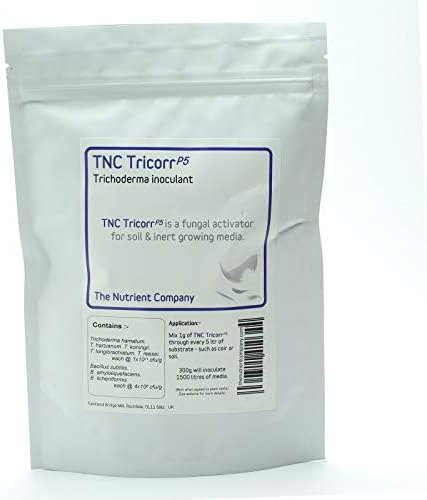
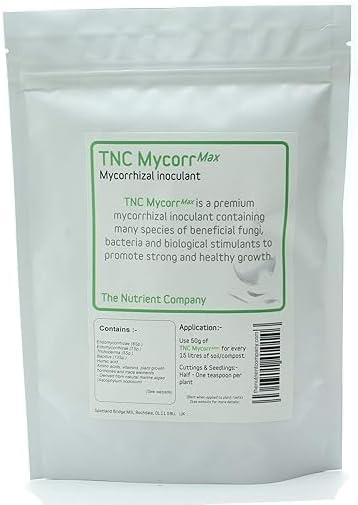
One detail matters here more than people think. I was actually surprised when a few plant demigods who use beneficials confessed that they did not make the connection until I pointed it out to them. Chlorine and chloramine can kill beneficial microbes. If you hydrate your inoculant with chlorinated tap water, you can reduce the very organisms you are trying to establish. I use RODI or properly dechlorinated water so the biology actually survives long enough to colonise. Many people swear by Ecothrive Neutralise, which I occasionally use as well when I need chlorine free water for my silly experiments.
I apply inoculant directly on the roots during potting, on top of the substrate that will go into the pot, so colonisation starts immediately.
Cannazym: I double it at the start and I do it on purpose
Some soil roots will die during the switch. That is normal. What is not normal is letting dead roots sit there and turn into sludge.
So for the first few weeks I run double dose Cannazym. The point is simple: break down dying root material faster so it does not become pathogen food or organic buildup inside Pon. Once I see clear new root growth and the plant looks steady again, I go back to my normal dose.
Katana Roots: strong start, then I taper
I use Katana Roots at 5 ml per litre for the first week.
After that, I reduce by 1 ml per litre each watering until I reach maintenance.
I taper because I want a strong trigger for new roots at the beginning, then I want the plant to settle. Staying at a high stimulant dose for too long can lead to weak, stretched growth rather than a solid root system that can actually carry the plant.
Feeding: I keep it boring and light
This is where people try to fix stress with more nutrients. It rarely ends well.
During the transition I add only a tiny amount of Formulex. That gives gentle baseline support and micronutrients without pushing foliage growth when the roots are still reorganising. I keep EC conservative for the same reason.
If you push an adapting plant hard, you can end up with a plant trying to grow leaves on a root system that is not ready. That is a great way to invite rot.
Watering: I mimic soil first, then slowly shift toward Pon life
I do not start with a full reservoir. I treat the early phase like a gradual change in moisture behaviour.
At first I keep the Pon evenly moist, but I avoid standing water. Over the next couple of weeks I slowly increase how wet I keep it. Only when the plant looks stable do I move toward my normal water level.
This gives soil roots time to adjust instead of suffocating them on day one. It also encourages the plant to build roots that actually like constant moisture.
Clonex Mist: foliar support while roots catch up
While the root zone is rebuilding, I spray Clonex Mist to support rooting and reduce transplant stress.
I keep it practical. I spray when airflow is good, and I make sure leaves dry before night. Humidity is fine. Wet leaves sitting overnight is how you create extra problems when the plant is already busy.
What I consider normal, and what makes me intervene
Normal early behaviour can include a bit of droop, a short pause in growth, and sometimes one older leaf yellowing. I do not chase those with extra feed. I let the plant settle.
What makes me step in is smell and collapse. A sour or slimy smell from the pot, roots going transparent and mushy quickly, or a sudden wilt that does not recover are signs I need to drain any standing water, increase airflow, and check the roots.
Pon is stable long term. The transition period is the risky part.
Why this routine works (TLDR)
It is not magic and it is not product stacking for fun. Each piece is doing a specific job during an unstable window.
- Trichoderma helps keep Pythium from taking advantage.
- Dechlorinated water keeps that inoculation alive.
- Double Cannazym stops dying roots from becoming rot fuel.
- Katana Roots starts new roots, then the taper keeps growth sturdy.
- Tiny Formulex supports without forcing.
- Clonex Mist helps the top half cope while the bottom half rebuilds.
- The gradual moisture ramp prevents suffocation.
That is the whole idea. Keep the plant calm, keep the root zone clean, and let it rebuild properly.
All products I use, including the ones mentioned in the article, are available in my Amazon Botanical Enablers List.
Enjoyed the content and want to support my work ?
Leave a Reply